MC² — Mindful Chillpreneurial Momentum Canada
Deep Work vs Shallow Work: A Canadian Introvert's Guide
Deep work needs protecting. Shallow work can be batched. A calm guide for Canadian solo introverts who want two quiet blocks and less daily noise.

Have you ever felt like your most energized hours simply vanish?
Maybe you sit down to write or create something meaningful, only to find the morning quickly filled with inbox replies, scattered administrative tasks, and the gentle hum of non-urgent errands. This feeling of time slipping away is particularly common for solo operators, especially those of us who tend to need a quiet corner to do our best work.
We often assume that every task deserves prime time. We treat our calendar like a checklist, believing that efficiency means fitting everything in. But for those building one-person businesses, letting shallow, interruptible tasks colonize your best energy is a silent drain on your capacity. It stops you from doing the high-impact work that actually moves your practice forward.
This guide is about reclaiming your time, not rushing through it. We are going to look closely at the difference between deep work and shallow work and define a rhythm that serves your real life. We will explore how to sort through a real task list in a quiet moment, why protecting two focused blocks can feel better than optimizing a full schedule, and how digital habits become the input discipline that keeps those blocks clean. This is a guide to finding your specific, sustainable cadence.
Why Your Best Hours Get Colonised First
It starts at the kitchen table. Laptop open, phone face up beside it, inbox already asking for three things before your first coffee.
Shallow work feels productive because it closes loops fast. One reply, one small finish. Those finishes reward you in the moment more than slow thinking does. Each interruption costs more than its minute, because you pay again in reorientation time.
Those quick wins claim your sharpest hours. By mid-afternoon the work that needed your full mind is still waiting, and less attention is left for it.
There is a Canadian layer. More than 500,000 Canadians entered self-employment each year, and a similar number left, according to CBC reporting from October 2015 citing Statistics Canada. Read that as historical context, not a current count. Income pressure makes answering everything immediately feel like survival.
No manager defends your calendar. The boundary has to come from a written rhythm you can return to, not willpower rebuilt every morning.
That is what the rest of this guide is for.
What Is Deep Work for a One-Person Business
So what belongs in those protected hours? Deep work, in MC2's working vocabulary, is effort that asks for your full attention and produces something that did not exist before. A client proposal, a chapter or course module, a template or automation inside 1FlowCraft, next month's offer map, or one careful email about a boundary.
The test is not how hard a task feels. It is how fragile it is. Deep work breaks under interruption. Shallow work bends and recovers. For introverts, that fragility has weight. A knock at the door or a notification sliding in can mean a longer walk back to the thought you were holding.
Be honest: deep and shallow are terms of practice, not findings from the research behind this piece. Treat them as our framework, and test them against your own week, guided by our values of intentionality and well-being.
Then match the work to your energy, not the clock. Many introverts find their widest attention window early morning or late evening, not the loud middle of the afternoon.
What Shallow Work Actually Is
Shallow work is the flexible kind. It is the low-focus effort that keeps the lights on: routine email, invoicing, scheduling, receipts, admin, small social replies, refreshing a listing.
It is not the enemy. A solo operator has a floor of it that no amount of automation removes, and pretending otherwise only adds guilt to an already full day.
Shallow is not the same as easy. Fiddly admin can drain you more than a hard piece of writing, because it spends attention without leaving you anything to feel proud of.
Here is the useful part: shallow work tolerates interruption. That makes it the right material for the leftovers, the fifteen-minute gaps, the waiting rooms, the days when focus simply is not available.
The goal is to move shallow work, not erase it, and to stop paying for it with your best hours. When a shallow task keeps climbing into prime time, ask whether it belongs in a batch window instead. The rest can wait until then.
How to Classify a Real Task List in Ten Quiet Minutes
Start with the real list, not the tidy one. Write every open task for the next two weeks on a single page, in your own words. Resist sorting while you write. The polished version is not the useful one.
Then ask each task two questions. First: does this lose value if I am interrupted? Attention residue means switching leaves part of your mind stuck on the last task. Second: does this need you specifically, or only someone with hands? That answer tells you what to batch and what to let go.
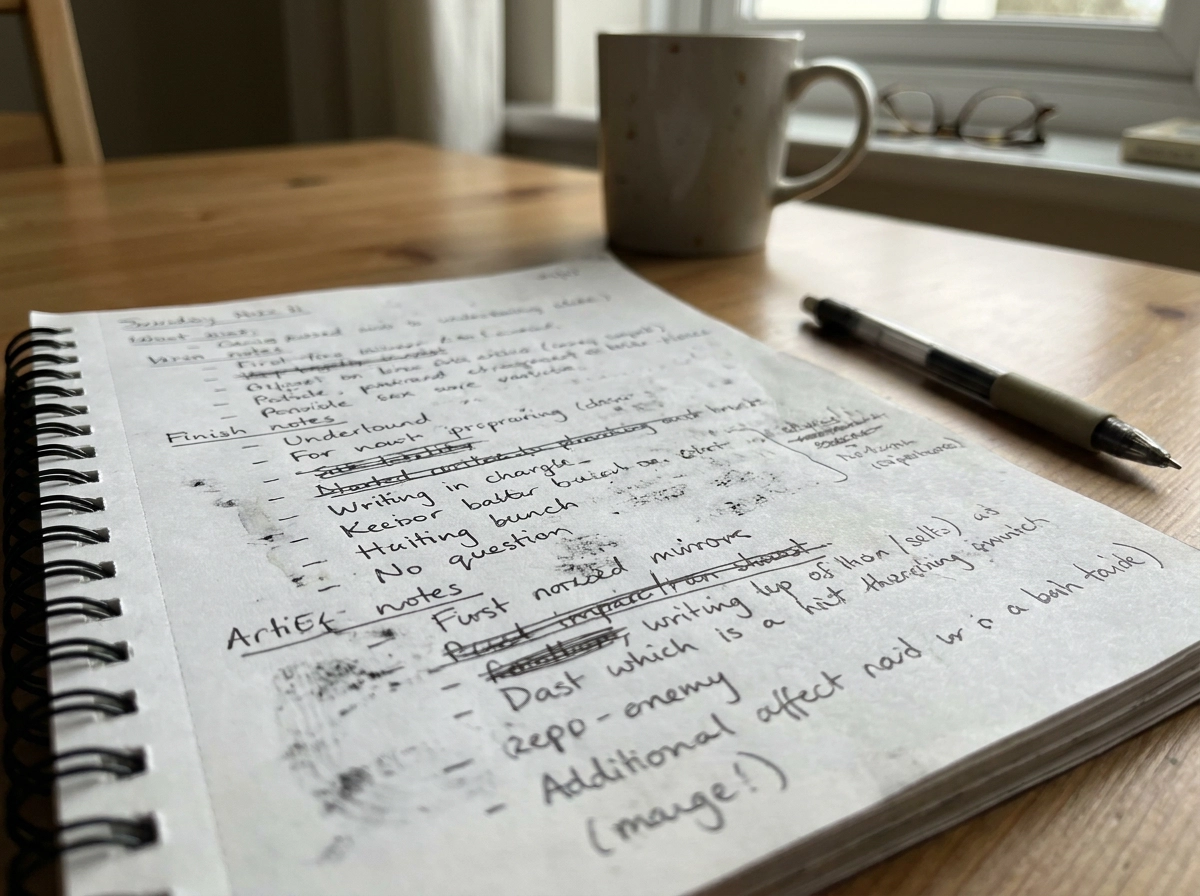
Sort into three piles only: deep, shallow, not this month. Three piles stay small enough to hold in your head.
Watch the compound tasks. Planning a launch is deep. Posting the announcement is shallow. Splitting a task until it gives one answer is most of the work.
Treat this first pass as a draft. This is MC2's own working framework, not a published method. Refine it over two weeks and keep only what holds. Then revisit once a season. Learning a new tool can feel like deep work at first and settle into something shallower once it becomes habit.
Those piles show you where your two deep blocks belong.
Why Two Deep Blocks Beat an Optimised Calendar
Your list is sorted. Now the harder question: where does deep work actually live in your week?
A fully booked calendar assumes every hour has the same capacity. It does not. A day planned to the minute leaves no room for the slow first ten minutes deep work needs to get going.
Two protected blocks are easier to defend than a perfect day. They fit around caregiving, appointments, and unpredictable mornings in a way a colour-coded schedule does not. Protect the block, not the output. Decide when it starts and how long it lasts, then let the work take whatever it takes. A block that produced thinking is not a failed block.
Say no to the third block on purpose. The leftover hours belong to shallow work, rest, and life. Giving them away is how the first two survive.
Treat this as a practice, not a proven result. Track two weeks of blocks against two weeks of scattered days. Your own week will answer. An imperfect calendar you can keep beats a beautiful one you abandon by Wednesday.
Keeping those blocks clean is the next job, and it starts on the input side.
Digital Minimalism: The Input Side of Deep Work
Those protected blocks only stay protected if the noise never reaches them. That is where digital minimalism comes in. It means choosing a small number of tools and inputs on purpose, so the noise stops arriving before the block even starts.
Notifications are the leak. Turn off email, message, and social alerts on the device you use for deep work. Keep that device to one job at a time.
Shallow work still needs somewhere to land. A written inbox in 1FlowCraft lets a message arrive without claiming your attention in the moment. You read it later, in the batch window.
Quiet the inputs the night before. Decide your first task before you close the laptop. Then the morning begins with the work rather than with a decision.
Keep the habit small. A five-minute Kairos reset before a block, sitting with the next single step, does more for focus than a new app you will stop opening by Friday.
This is not about owning fewer things for its own sake. It is about keeping the inputs quiet enough that one protected block stays protected.
What to Batch, and Where the Leftovers Window Is
With your inputs quiet, shallow work needs somewhere to land. Batching is that place. It means grouping similar shallow tasks into one window so the switching cost is paid once instead of each time you switch.
Good candidates: email replies in two short sittings, invoices and receipts on one afternoon, scheduling and admin errands together, social replies in one brief pass. Similar work, one sitting, one mental gear change.
Choose the leftovers window by energy, not principle. If your afternoon is foggy, that is the honest home for admin. Not a personal failure, just information about your day.
Protect the edges. A batch window that bleeds into the evening quietly eats the rest you need. Give it a finish time and keep it. Let the batch be boring, too. Forty quiet minutes of receipts is the window doing its job. There is no prize for making admin interesting.
And batch what you already have before adding anything new. Moving existing shallow work is easier than inventing a system from scratch. New tools can wait until the old tasks have a home.
When the Plan Bends: Caregiving, Low Energy, and Interruptions
Some seasons refuse to give you two clean blocks. Caregiving, illness, and disability change the shape of a week. Let the plan change with it, not against it. Energy-aware planning is simply this: match the work to the day you actually have.
Shrink the block instead of cancelling it. Twenty minutes behind a closed door is still a deep block, and it still counts. On the thinnest days, use the smallest unit you have. The One Priority Per Day Planner exists for when one honest priority is the entire plan.
Name interruptions before they arrive. A note on the door, a message to the household, headphones worn as a visible signal. They stop being surprises.
If a block gets lost, note what took it and move on. Guilt is a shallow task with no return. Then ask what your energy is doing today, and start there. Not where the plan says you should be. The rest can wait.
A Gentle Weekly Rhythm You Can Actually Keep
The plan bends. The rhythm doesn't have to.
Three moves make a week: ten quiet minutes on Sunday or Monday to classify your list, two named deep blocks, and one or two batch windows. Writing the week down somewhere quiet makes it easier to return to after a hard morning.
Keep one workspace for deep work, and let 1FlowCraft hold the shallow work. Opening that window keeps the deep work separate from the rest. Our planners, guides and tools hold the rest, and you can read what is available before deciding anything.
On Friday, review in five minutes. Which block held? Which batch window overflowed? What moves next week?
Keep the rhythm low volume. If running the plan takes longer than the work, the plan is too big.
Three named companions, plainly: Kairos for the five-minute reset, the One Priority Per Day Planner for thin days, and SoloMind as a free, quiet starting point. See what you get in each. That is the whole rhythm. Small enough to keep, even in a week that bends.
Conclusion: Two Blocks, and Permission to Start Small
That rhythm comes down to one sorting decision. It comes down to sorting: fragile work in a protected block, flexible work in a batch window. Keep two blocks, let the calendar stay imperfect, and decide the first task the night before. That is the whole system.
If a written, self-paced rhythm would help, the One Priority Per Day Planner or the free SoloMind app are quiet places to begin. Tools are doorways, not requirements.
You don't have to do this today. Pick one block, one batch window, and let the rest wait.